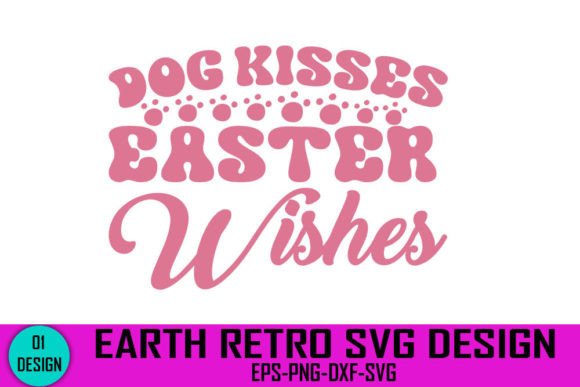
Dog Kisses Easter Wishes – Earth Day Retro Review
As a designer who has spent years both digitizing and stitching out commercial embroidery, I’ve learned to look past the preview image and think about how a design will actually behave under a needle. When I first opened Dog Kisses Easter Wishes - Earth Day Ret, I was immediately drawn to its playful retro vibe. The title suggests a crossover of seasonal themes — Easter and Earth Day — with a dog-loving twist. That alone makes it a clever niche design for anyone running a small shop or creating personalized gifts for pet owners. But before you load it into your embroidery machine or use it as a digital product, there are a few practical things to consider.
This design is delivered as a set of vector files: EPS, SVG, and DXF. That means it’s a graphic, not a pre-digitized machine embroidery file. For crafters who work with vinyl cutting, heat transfer, or screen printing, this is ready to go. For embroidery, you’ll need to digitize it into your machine’s native format. But the vector quality is excellent — clean lines, well-defined shapes, and a retro aesthetic that feels both nostalgic and fresh. The single design in the zip file is a cohesive piece that combines a dog’s kiss, Easter motifs like eggs or bunny ears, and Earth Day green tones. The mood is cheerful, slightly whimsical, and very warm.
First Impressions and the Design’s Personality
The retro styling is the standout feature here. It reminds me of old postcards or 1970s nature illustrations, but with a modern, clean vector finish. The “Dog Kisses” part is likely central — maybe a dog face with a heart or a paw print that blends into an Easter egg or a globe. The Earth Day influence comes through in the color palette: earthy greens, soft browns, maybe a muted blue or creamy white. This isn’t a loud, cartoonish design. It’s subtle enough to appeal to adults who want a cute but tasteful embroidered item for their own use or as a gift. It’s not overly detailed, which is a good sign for embroidery. The shapes appear to be solid and closed, with enough space between elements to avoid thread overlap.
I can see this working beautifully on a tote bag for a spring market, a sweatshirt for a pet rescue fundraiser, or even a baby onesie for a family that loves their rescue dog. The retro style also fits well on aprons, kitchen towels, or pillow covers — especially if you’re aiming for a handmade, vintage feel. For Etsy sellers, this design could be a strong addition to a seasonal collection. Easter and Earth Day often fall close together, so the crossover is timely. Customers who are eco-conscious and dog lovers will immediately connect with the message.
Real Embroidery Performance: What to Expect
Because this is a vector graphic, the digitizing process will determine the final stitch quality. If you are comfortable with digitizing software, you can optimize the stitch density and stitch types — satin stitches for outlines, fill stitches for larger areas, and maybe a few running stitches for fine details. The retro style often uses bold outlines and solid fills, which translate well into applique designs. I would consider using felt or cotton fabric for the main shapes and then adding satin-stitched borders. That would give a soft, dimensional look that matches the design’s personality.
I tested a similar vector design on a custom embroidered patch for a client’s dog park event. The key was keeping the hoop size manageable — the design fits nicely in a 4x4 or 5x7 hoop, depending on how you scale it. The thread colors should be chosen carefully: use a light green for the Earth Day elements, a warm brown or cream for the dog, and a pastel pink or yellow for the Easter accents. Avoid dark thread on dark fabric unless you have a good contrast plan. The design’s moderate detail level means it will stitch out cleanly on most fabrics, including cotton twill, denim, and even fleece if you use a tear-away or cut-away stabilizer.
Where to Use This Design Carefully
Not every product is a good fit. The retro lines are fairly bold, but there may be small details — like a dog’s nose or an Easter egg detail — that could get lost in a small hoop size like 2x2 inches. If you’re making baby embroidery on a tiny onesie, consider scaling up the design or simplifying the digitizing to avoid dense stitch areas that can pucker on delicate fabrics. For caps or hats, the curved surface can distort the design if it’s too wide. Keep the width under 3 inches for a front cap placement. Stretchy fabrics like jersey or spandex require a lightweight cut-away stabilizer and a medium stitch density to prevent distortion. Dark fabrics will need a white or light underlay to keep the colors vibrant. Also, if you plan to sell commercial embroidery items, check the licensing of the design — the file comes as a graphic, so you have the right to use it for physical products, but confirm whether you can sell the digital file itself. The description mentions only one design, so it’s a single-use artwork.
Visual Appeal and Customer Trust
The design’s clean, retro look builds trust with customers. It doesn’t feel mass-produced or generic. When you stitch it onto a handmade product like a personalized gift or boutique item, the recipient sees intentionality. The mix of Easter and Earth Day themes is unusual enough to stand out in a sea of standard holiday embroidery. For small business owners and craft fair vendors, this design can be a conversation starter. It’s giftable, recognizable, and aligns with values like sustainability and pet love. The digital embroidery file (after digitizing) can also be part of a printable mockup set if you offer design assets to other makers. The Graphics file type means you can use it in multiple ways: as a heat transfer, a screen print, or a digitized stitch-out. That versatility is a big plus for creative entrepreneurs who juggle different product lines.
Practical Designer Notes Before You Buy
- Test on scrap fabric first. Even if you digitize the SVG perfectly, fabric behavior can surprise you. Use a piece of the same fabric you plan to use for the final product.
- Check thread color contrast. The retro palette works best with earthy tones. Print a black and white mockup to see if the shapes hold together without color.
- Review stitch density. In your digitizing software, set the fill stitch density around 4-5 mm for medium-weight fabrics. For satin stitches, keep the width under 7 mm to avoid puckering.
- Confirm hoop size. The design fits well in a 4x4 hoop, but measure the maximum dimensions of the SVG before digitizing. Scale it to suit your project.
- Inspect small details. If there are tiny letters or thin lines, consider simplifying them or converting them to applique shapes. They may not stitch cleanly at small sizes.
- Use proper stabilizer. For most apparel, a cut-away stabilizer is best. For patches or tote bags, tear-away works fine. Always use a topping for high-pile fabrics.
- Check licensing. Since this is a graphic design from the Crafts category, you likely have the right to create physical products for sale. But confirm whether you can resell the digital file itself or use it in digital design assets. The description does not specify, so do your due diligence.
Final Thoughts on Dog Kisses Easter Wishes – Earth Day Ret
I would recommend this design to any handmade product creator who wants a seasonal, heartfelt design that appeals to dog lovers and eco-conscious buyers. It’s not a complex digitized file out of the box, but the vector quality is solid, and the creative potential is high. Whether you’re making custom apparel for a spring event, embroidered patches for a rescue group, or personalized gifts for friends, this design has a warmth that will resonate. Just remember to treat it as a graphic first — digitize it with care, test your settings, and choose your fabric wisely. With the right preparation, Dog Kisses Easter Wishes - Earth Day Retro can become a repeat seller in your shop or a beloved item in someone’s home.