Labrador Santa Dog Ornament – A Hands-On Design Review
When you work with custom apparel and handmade products for a living, you learn to read a design file the way a tailor reads a bolt of fabric. You see potential, sure, but you also see the hidden challenges, the stitch counts you haven't met yet, the hoops that might not fit, and the customers who are harder to please than a finicky stabilizer. I have been on both sides of the embroidery table, designing and stitching, and I have learned to trust my first impressions. When I opened the Labrador Santa Dog Ornament graphics, I knew immediately this was a design meant for real projects, not just screen candy. Let me walk you through what I see, what I would test, and where I would use it in my own embroidery work.
A Design with Instant Holiday Appeal and Real Stitching Potential
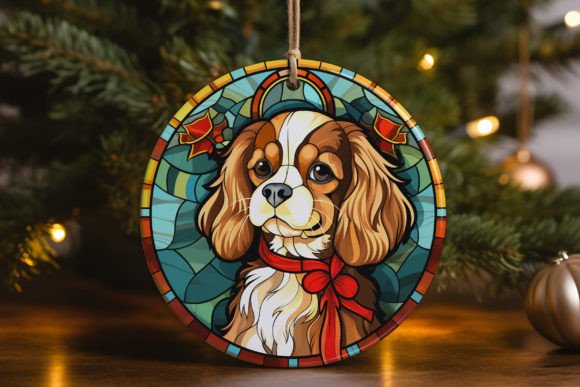
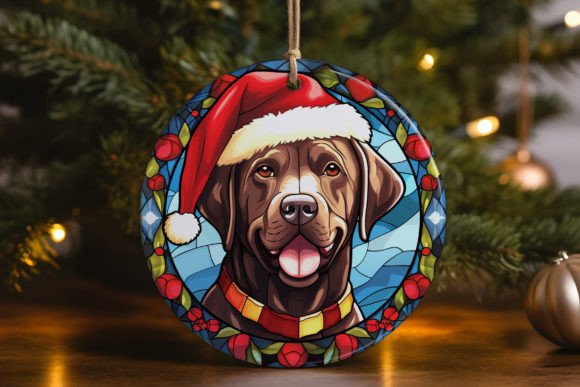
The Labrador Santa Dog Ornament lands with a warm, playful mood that feels right for seasonal crafting. The subject is a Labrador retriever, wearing a Santa hat, presented in an ornament format. The straight version measures 9.3 by 8.2 inches at 300 DPI, and the tapered version matches those dimensions, which gives you flexibility for different hoop orientations and product placements. The first thing I noticed is the shape. It is round and contained, which is a strong advantage for embroidery. There are no stray fine lines or tiny floating elements that cause registration headaches. The dog face is the center of attention, and the hat adds just enough festive character without overwhelming the composition. For a machine embroidery design, this kind of clean focal point is gold. It reads well at a glance, and it does not rely on microscopic detail to carry the charm. That means it will hold up in stitch form, even on textured fabrics like fleece or sweatshirt material.
As a design asset in the Graphics category, this piece works beautifully as a reference for digitizing. The high resolution PNG at 300 DPI gives you clear edges to trace or auto-digitize, and the straight and tapered versions allow you to adjust your layout without resizing and losing quality. If you are a digital embroidery file seller or a craft business owner who creates finished products, you want that adaptability. The ornament shape also lends itself to patches, which is a growing market for Etsy sellers and small shop product creators. I would feel confident handing this to my digitizer and saying, make this stitch-ready.
Real Embroidery Use: Where This Design Shines on Fabric
Let me describe a real scenario. A customer walks into my shop with a high-end chocolate brown sweatshirt. She wants a custom holiday gift for her father, who owns a black Lab. She has seen generic Santa dog designs online, but nothing with a Labrador face that actually looks like a Labrador. I pull up the Labrador Santa Dog Ornament, show her the PNG on my tablet, and she nods before I even finish explaining. That is the power of a specific, recognizable breed design. It connects immediately with dog owners who are tired of generic poodle-looking Santa pups. The emotion is personal, and that sells.
For the actual stitching, I would test this on a medium-weight cotton twill tote bag first. The ornament shape is compact enough for a tote front or a matching patch on the side. I would use a tear-away stabilizer for the tote, but if I moved it to a stretchy fabric like a tri-blend t-shirt, I would switch to a cut-away stabilizer and possibly a softer fill stitch density. The 9.3-inch width is generous for a chest or front placement on adult apparel, and it would also fit nicely on the back of a youth sweatshirt or as a center design on a pillow cover. For baby embroidery, I would scale it down carefully, but the original size is really built for medium to large projects. That is a practical consideration any embroiderer will appreciate. You are not fighting a design that was meant to be viewed at thumbnail size.
For commercial embroidery work, especially if you are producing multiple units for a client, this design has a manageable density profile. It does not look like it will overload the fabric with stitch density in the hat or the dog fur. The contrast between the red hat and the dog face is natural, and the white trim and pom-pom give you a chance to use a bright white thread that pops against almost any background. I would recommend testing three thread colors: a deep red, a crisp white, and a warm brown or black for the Labrador coat, depending on the recipient dog. If you want to add depth, a slightly lighter brown for highlights would work well, but the design is strong even with a minimal palette.
Where to Use This Design with Care and What to Watch For
No design is perfect for every surface, and the Labrador Santa Dog Ornament has its limits. The ornament shape is round, which means on curved surfaces like caps or beanie hats, you will need to use a tapered version or a smaller hoop to prevent distortion. The tapered PNG option gives you a head start on that, but I would still test it on a cap form before stitching a batch for a client. On very thin or lightweight fabric, such as a rayon blouse or a delicate kitchen towel, the density of the ornament border could cause puckering. I would use a lightweight stabilizer or a water-soluble topping to keep the stitches from sinking into the weave.
Another consideration is dark fabric. The design relies on the contrast between the dog face and the hat. If you stitch it on a black sweatshirt with black thread for the Labrador, the face may blend into the background unless you use a lighter outline or a subtle satin stitch border. I always tell my students to preview their design in grayscale or black and white before stitching. If the shapes disappear on a dark background in the mockup, they will disappear in the hoop. For this design, I would recommend a medium to light fabric background or a contrasting patch background, such as a cream or red twill patch stitched onto the garment. That way the Labrador face stays readable and the ornament shape stays crisp.
For applique design work, this piece could be adapted by using the ornament outline as a placement line and the dog face as a fabric applique layer. But if you are using it strictly as a fill stitch embroidery, check the stitch count beforehand. High stitch density in the hat trim or the dog ears could make the design stiff, especially on soft fabrics. I always run a test stitch on a scrap of the actual garment fabric before committing to a production run. That five-minute test saves hours of frustration later.
Visual Appeal, Product Value, and the Customer Experience
The Labrador Santa Dog Ornament elevates the perceived value of any handmade product it goes on. A plain sweatshirt becomes a thoughtful personalized gift. A simple tote becomes a boutique item. When a customer sees that the design specifically matches their dog breed, they feel seen. That builds customer trust and makes them more likely to return for other breed-specific designs. From a small business owner perspective, this is the kind of design that sells itself at craft fairs and holiday markets. It is recognizable, heartwarming, and easy to describe in a listing. If you are an Etsy seller, the PNG files give you a printable mockup option for your product photos. You can show the design on a mockup sweatshirt or tote without stitching every sample, which saves time and materials while still presenting a polished image to buyers.
The professionalism of the design matters, too. The clean lines and balanced composition mean that even a moderately experienced embroiderer can produce a finished product that looks like it came from a boutique. That is not true of all digital embroidery file assets. Some designs look great on screen but stitch out as a blob of thread. This one has enough structure to guide the eye and enough simplicity to stitch cleanly. For apparel decorators who need to deliver consistent quality across multiple items, that reliability is worth more than flashy details.
Practical Notes Before You Hoop Up
Before you spend time and thread, here is a checklist I use for any new design, including this one. First, test the design on scrap fabric that matches your final product. Use the same stabilizer you plan to use in production. Check the hoop size against the 9.3 by 8.2 inch dimensions. If your hoop is smaller, you will need to resize carefully, and resizing a PNG means recalculating stitch density if you are digitizing from it. Second, review the design in black and white to confirm contrast. Third, check the thread colors you plan to use against the fabric color. Fourth, if you are selling the finished products or using the design for commercial embroidery, confirm the licensing for the Labrador Santa Dog Ornament file. The listing notes that this includes PNG files, so you need to understand what rights come with it. Fifth, for design assets that are graphics rather than native embroidery formats, I always recommend either digitizing from scratch or using a high-quality conversion service. The 300 DPI PNG is an excellent source file, but it is not a machine-ready embroidery file. Treat it as the creative blueprint, not the final stitch instruction.
For hobbyists and creative entrepreneurs just starting out, this design is a safe place to practice. The ornament shape forgives minor alignment issues. The detail level is moderate. The holiday theme gives you a natural selling window from November through January. If you are building an inventory for holiday markets, consider stitching a few samples on aprons, pillow covers, or kitchen towels as lower-cost entry items, and keep a few on sweatshirt embroidery and tote bag designs for higher-margin sales. That mix lets you test the market without overcommitting to one product type.
The Labrador Santa Dog Ornament has a personality that works for both personal gifts and small shop product lines. It is specific enough to feel custom, but universal enough to appeal to a broad audience of dog lovers. If you approach it with the right preparation, proper stabilizer, and a clear idea of your customer, it will stitch out as a design you can be proud to sell or give. That is the kind of embroidery project that builds a reputation. And in this business, reputation is everything.